Showing posts with label microsoft. Show all posts

Friday, November 5, 2010

Kinect has problems recognizing dark-skinned users?

Source: In testing the Kinect, two dark-skinned GameSpot employees had problems getting the system's facial recognition features to work.

What we heard: Part of Microsoft's $500 million marketing push for Kinect includes positioning it as an accessible entertainment device for all audiences. However, it may be more accessible to some than others.

While testing out the Kinect, two dark-skinned GameSpot employees experienced problems with the system's facial recognition abilities. The system recognized one employee inconsistently, while it was never able to properly identify the other despite repeated calibration attempts. However, Kinect had no problems identifying a third dark-skinned GameSpot employee, recognizing his face after a single calibration. Lighter-skinned employees were also consistently picked up on the first try.

It's important to note that the problems were only experienced with the system's facial recognition feature and don't prevent users from playing Kinect games. Skeletal tracking, a primary means of controlling games with Kinect, appeared to work the same for all GameSpot employees.

The system's inability to recognize a user only means that he or she would need to sign in manually and some games' features may not work properly as a result. For example, when a second player joins in to Kinect Adventures during the title's drop-in, drop-out multiplayer, the system can't bring up that player's proper in-game avatar automatically if it can't identify the new user first.

If Kinect does have some technical issues related to users' pigmentation, it wouldn't be a first for recognition technology. Last holiday season, users of Hewlett-Packard computers with built-in webcams reported problems with a face-tracking feature.

HP blamed the problem on the webcam's technology, "standard algorithms that measure the difference in intensity of contrast between the eyes and the upper cheek and nose." It said the system could have problems "seeing" that contrast if there is insufficient foreground lighting.

[UPDATE 11/4] GameSpot continued its testing of Kinect today with more users in different rooms and different clothing. At first, the two employees who originally would not be recognized by the camera were correctly identified on the first try. However, when one changed from a light blue shirt to a black shirt (but stayed in the same room with the same lighting), the camera again failed to recognize him after multiple calibration tests. It also failed to recognize another darker-skinned GameSpot employee after four calibration attempts.

Somehow, those issues may not completely undermine the camera's ability to use facial recognition features. Despite the Xbox 360's insistence that it could not recognize some of the GameSpot employees immediately after calibration, the system was able to recognize them and sign them in properly when they waved at the camera, regardless of their clothing.

The official story: "The goal of Kinect is to break down the barriers for everyone to play, and it will work with people of all shapes and ethnicities at launch."--A Microsoft representative, who added that Kinect owners having calibration or recognition problems can call 1-800-4-MY-XBOX.

[UPDATE 2]: After the additional testing, Microsoft provided further comment, saying, "Kinect works with people of all skin tones. And just like a camera, optimal lighting is best. Anyone experiencing issues with facial recognition should adjust their lighting settings, as instructed in the Kinect Tuner."

Bogus or not bogus: Not bogus that Kinect has problems identifying some users. Abstain on how widespread those problems are, or whether they're due to skin color at all. With the system launching tonight and Microsoft expecting to sell 5 million by year's end, it shouldn't be long before the scope and cause of such problems are identified.

Tuesday, August 31, 2010

Microsoft shows off new controller, with transforming D-pad

courtesy of ArsTechnica

The D-pad on the existing 360 controllers is, to put it mildly, utter garbage. If you want to play any games relying on precise movements, such as fighting games, buying a third-party controller is a requirement. Microsoft hopes it has this problem licked, however, and is releasing a controller with a new, updated D-pad on November 9. The catch? You won't be able to buy the controller alone; you'll need to grab the Play and Charge Kit to get it, and the final cost will be $64.99.

Here is the controller, complete with transforming D-pad.

Major Nelson will be giving away a few of these controllers at PAX this Sunday, and we'll be bugging Microsoft for one to report on how much better the D-pad works in this new design. Once thing we do know, it certainly can't be worse.

Saturday, August 21, 2010

Hackers Claim to Have Grabbed Halo: Reach From Microsoft Site

courtesy of escapistmagazine.comimage

A team of hackers has allegedly broken Microsoft's security and got its hands on Halo: Reach a month early.

Remember that twelve-hundred dollar Halo: Reach listing we told you about earlier in the week? Well, it looks like it's gotten some attention, and not just for its hefty price tag. A group of modders from the Game-Tut forums have claimed that they were able to trick Microsoft's servers into letting them download the game and have been taking it for a spin.

The group said that obtaining the game had been a challenge, but even though they'd been successful, they had no plans to distribute it. Bungie is yet to comment on these reported leaks, although its forum moderators have reminded posters that discussing leaked details was a surefire way of earning a permanent ban.

Microsoft, on the other hand, has issued a statement about the leaks, saying it was aware of the group's claims and was "aggressively investigating" the matter. If Reach has indeed been leaked - and there is other evidence besides the team's comments to suggest that it has - then it will come as something of a blow to Microsoft. It's not going to stop the game selling a bajillion copies, but it may make Microsoft reconsider using Xbox Live for sensitive material in the future.

Halo: Reach gets its official release on September 14th.

Wednesday, June 30, 2010

Kinect preorders 'very low' - UK retailer

courtesy of Gamespot

Microsoft confirmed a November 4 launch for its Kinect motion-sensing camera peripheral at this year's Electronic Entertainment Expo, but it didn't nail down a price for the device. Despite the lack of official word, US retailers began taking preorders for Kinect at $150, and while Microsoft declined to make the number official, it opened up its own preorders at the same price point. Now one retailer is saying that price is too high, and preorders have suffered as a result.

In an interview with Eurogamer, ShopTo CEO Igor Cipolletta told the site the number of Kinect preorders the retail chain has received is "very low." As for the pricing, ShopTo currently offers the Kinect for €153.75 ($188), while the executive pointed out that a Wii can be had for just a little more. ShopTo's online site is currently sold out of Nintendo's hardware, but the Wii Sports Resort bundle ordinarily sells for €166 ($203).

"It's too high," Cipolletta said of the Kinect price. "We believe that with this current economy it should be around £70 ($105)."

When Kinect arrives, Microsoft expects 15 games to launch alongside the device. First-party offerings include Kinect Adventures, Kinectimals, Kinect Joy Ride, and Kinect Sports. A number of third parties are also on board, developing such titles as EA Sports Active 2, Konami's DanceMasters, and Sega's Sonic Freeriders. Publishers have also promised postlaunch support, such as a Star Wars game from LucasArts, Q?'s Child of Eden, and THQ's UFC Trainer.


Thursday, June 17, 2010

ESPN to Deliver Programming Over Xbox Live

courtesy of kotaku

ESPN to Deliver Programming Over Xbox Live

Microsoft and ESPN have struck a deal delivering exclusive sports programming to Xbox Live. The partnership will deliver more than 3,500 sports events, most of which will be in high definition.

ESPN anchors Trey Wingo and Josh Elliot took the stage to demonstrate the service, which will be free to Xbox Live Gold subscribers. Highlights from last year's USC-Ohio State college football game and game two of this year's NBA Finals were shown, indicating that the service should offer top sporting events also being broadcast on the main network. The service will also offer polls, trivia and other content inline with the broadcasts.

Xbox Live Vs. PlayStation Plus!

courtesy of kotaku


There isn't just one paid online console gaming service, anymore. There are two. Xbox Live and the newly revealed PlayStation Plus are going head-to-head. But, how are the two services different?

This is what we know so far:

Price

An annual "Gold" membership for Xbox Live is $49.99. The "Silver" membership is totally free, however. The upcoming PSN Plus is also priced at $49.99 for a year and $17.99 for three months. The regular PSN service is free of charge. Sony is planning on offering an initial three month trial membership for PlayStation Plus for those who sign up for a year's worth of service for a total of 15 months, priced at $49.99.

Downloadable Content

Both Xbox Live Gold and Silver members have access to downloadable content like demos and game trailers; however, some Xbox Live Gold content becomes available to Silver members a week later. According to Sony, the PlayStation Plus "Exclusives" include "full game trial" as well as "select early demos". PlayStation Plus offers a "Full Game Trial". According to Sony, that means players can play a game for up to one hour and purchase the title to unlock trophies and continue said title.

For current PSN users, demos and game trailers, and we do not see this changing, because it is such a powerful marketing tool for games. The "select early demos" bit sounds similar to how Microsoft rolls out content early on Xbox Live for Gold members.

Discounts

Microsoft has had "weekly deals" on Xbox Live to Gold members with 50 percent on select Xbox Live Arcade games, Xbox originals and downloadable content. Sony's Playstation Plus is planning to offer its paid users PSN Store discounts, free games and downloadable content. You would also get access to one new PSN game per month (possibly only for as long as you're a paying subscriber, though we're not sure of that).

Chat

Both Xbox Live Gold and Silver members have voice chat capabilities, but video chat and party chat are reserved for the fee-based Gold members. Sony currently offers free voice chat and voice free of charge to its PSN users. No word yet on what new robust chat services will be offered via the PlayStation Plus.

Social Networking Sites

Paid Xbox Live Gold users get Twitter and Facebook integration, while Xbox Live Silver members do not. Sony's free PSN service already offers Facebook integration.

Netflix

Netflix subscribers can take advantage of both the PSN and Xbox Live. The difference is that PS3 users can stream Netflix on the console for no additional charge, and for the Xbox 360, only Xbox Live Gold membership members may access their paid Netflix account.

Multiplayer

The traditional divide between Microsoft's paid Gold service and its free Silver service is multiplayer. On the Xbox 360, players that want to experience multiplayer online gaming must play the Gold membership fees. Conversely, since the PS3 launched, it has offered free multiplayer gaming. PlayStation Plus does not currently appear as though it will change this.

Firmware...Wait, Firmware?

According to Sony, the company has made it easier for PlayStation Plus users to get their firmware updates. This PlayStation Plus updating service covers patches and updates. More details on this as they become available. Microsoft does not offer such a service to Xbox Live members.

This is, as previously mentioned, what we currently know and obviously subject to change once Sony launches PlayStation Plus later this summer. There will be kinks for the company to iron out, so stay tuned to see how Sony continues to differentiate its paid online service from Microsoft's. So far, Sony is positioning PlayStation Plus to be entirely optional, but the battle of the paid subscriptions is just getting started.

Wednesday, April 21, 2010

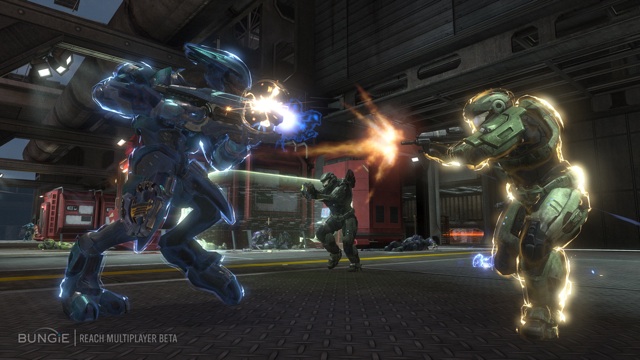
Refined, polished, punishing: Ars plays Halo: Reach multi

courtesy of arstechnica


After finding myself on the receiving end of so many flames after failing to name Halo: Reach as one of our most-anticipated games of 2010, I promised myself I'd deliver some good coverage of the game for our readers. Bungie did one better, and let us simply play the game for an afternoon. As is our policy, Ars Technica paid for 100 percent of our travel and hotel expenses.

The best preview events, the ones where you know the game is going to be good, are the ones where the people behind the game know enough to get out of the way and let you play the game. Last week I flew into Seattle at the invitation of Bungie to sample the multiplayer of Halo: Reach, and the crew gave the assembled press a short presentation of each of the maps and game modes we would be playing. Then they simply stood back and allowed us to play against each other.

The mood was serious at first, as everyone spent time taking notes and murmuring to themselves about this detail or that reveal, but soon the room devolved into a group of hooting, cursing fans playing the game. "This is the first time anyone outside of Bungie has played this," we were told, but the developers were more than happy to allow us to enjoy the game.

"Do you guys want to play a round of Juggernaut?" we were asked. Of course we did. There was some question of how much to reveal to us in our time with the game, and this seemed to create a short internal struggle. "It's in there," one of the developers said, shrugging as he motioned to our builds of the game. Soon he was setting the game type up on one of our stations, and we were playing. In another round of Headhunter, things were extremely tense as a three-way tie finally ended with a victor. After the cheers, those of us in the room took a moment to sink back into our seats and take a breath.


"That was one of the closest rounds of Headhunter I've seen," we were told by the onlookers. I nodded. The game clicked for everyone in the room, and we were lost in the struggle of collecting the flaming skulls and trying to up our own score. It was a delicious assignment: hang out with a dozen or so members of the gaming press and just take the new multiplayer modes of Halo: Reach out for a test drive. Kick the tires a few times. We weren't shown everything, but we were given the run of the content that will be available in the beta when it goes live, with promises that there was a lot from the full game that we wouldn't be seeing.


There is a reason this series is so respected

There is a fair amount of hate for the Halo series, in the way that anything with this level of popularity brings out the haters. What the nay-sayers don't understand is that nothing else in gaming feels like Halo. If you don't enjoy the series, more power to you; taste in games is personal and you should always play what you like. For those who love Halo though, they understand that it's a slower paced, deliberate, slightly insane multiplayer experience.

The fact that you're stuck with only two guns at a time, the reliance on grenades to flush out enemies, the floaty jumps and the love of melee attacks—it doesn't look or play like anything else on the market. Every time Bungie releases a Halo game, the multiplayer is tweaked and refined and improved, but the formula remains consistent. Halo is a game that simply works, and its fans expect a high level of polish when they play.

Matchmaking is set to get a boost in this version of Halo, with a smoother experience that works well even with more players. The new system also allows for impressive granularity: you can make the game prioritize connection speed, skill level, or games in your native language when trying to find a game. You also have social settings to choose from, to make sure you play with people who match your style. Do you talk? Are you quiet? Do you play competitively, or simply to enjoy yourself? Do you go Rambo, or enjoy teamwork? Do you like a polite game, or are you a trash talker? By adjusting all these options you'll be able to filter out people whose play styles may be distasteful, allowing you a better play experience.

There is also a credit system, where you gain virtual currency by playing the game. You use these credits to buy different options for your armor, and your aesthetic choices will be shown in both the single and multiplayer modes. You gain credits by playing the game, and by clearing challenges that will be constantly added to the game. Daily challenges may be easy to accomplish, but the weekly challenges will require a heavier time commitment. Commendations will also be awarded based on your behavior, with seven different Commendations included in the beta. All these things simply serve as your way to gain credits, and the credits are only spent on prestige items to change how you look to other players.


Derek Carroll is the Multiplayer Designer on Halo: Reach, and I asked him if there was ever a temptation to allow players to purchase better weapons or powers with credits."Not for us," he said. He understands that some games have you begin with an underpowered character and make you earn a "good character," but that simply doesn't fit into what they want for their own games. "Halo has always been about everyone having the same bag of tools... when you first start playing it you'll learn and grow, the RPG happens on the inside." You get better with practice, not by earning better weapons and abilities. "It has come up, but internally there has not been the temptation to do that."


The multiplayer isn't class-based, but you'll be making choices

Certain game modes will ask you to choose from a selection of armor powers, which come with a set loadout when you spawn. You'll still be able to pick up any weapon in the battlefield, but these powers will affect your strategy and give you some advantages in certain situations.

The jetpack was the most remarked upon addition to multiplayer, and it adds a very welcome sense of the vertical to the game. It's also wonderful to simply fly over the head of an opponent stalking you with the energy sword. You have a limited amount of thrust, and you can take falling damage if you fly too high and don't have the energy left to break your fall. Spartans can also take the Sprint ability, which is simply a flat run to increase your speed, while taking away your ability to shoot. The Elites can take the Evade power, which allows them to dodge and roll away from attacks, just like they do in the single-player game. Throwing a well-aimed grenade, only to have your prey tuck and roll to the side and continue to come after you is unsettling, to say the least.

Active Camo is now an Armor Ability as well, giving the player a limited time to be less visible. Standing completely still makes you completely invisible, while walking, running, and shooting makes you easier to pick out. Armor Lock is an interesting ability: when activated the Spartan crouches and becomes completely invincible, but cannot shoot or move. It's an easy way to soak even the most powerful weapon shots, and if you stay down for long enough, you throw off an EMP charge when you get up, killing the shields of nearby enemies and allowing you to quickly turn the tables. It's a risk/reward move, but when used well it's a very effective tactic.

You choose your Armor Power when you spawn, and can change from one to the other as many times as you'd like in a single round. Don't worry: there are still plenty of game modes that don't allow these powers if you like a more classical experience. Each game mode offers different loadouts, with a combination of weapons and Armor Abilities to choose from, and those will be specific to different game modes and maps. In the final version you may also be able to customize these yourself.


Invasion ups the scale of Halo multiplayer

The largest change in the multiplayer of Halo: Reach is the Invasion game mode. Maps with multiple objectives, played with Spartans against the Elites, will make this mode a hit among fans of a more tactical and team-based experience. The map we played was Boneyard, a large graveyard for decommissioned ships. The Elites have to climb onto a vessel being held by the Spartans, and stand inside set areas for twenty seconds to unlock the next area. The second area features vehicles, upping the scale of the battle, and each progressive step allows both sides to choose from more powerful loadouts and Armor Abilities.


After opening the second set of doors, the Elites have to steal a power core and walk it to an extraction point to win. At this point in the round there will be Scorpions and Scarab tanks fighting; there is a Warthog available, as well as Wraiths, and all the loadouts are available. The last push, with the Elite running the power core to safety, can be incredibly chaotic, and team play is essential to win. The round ends either when time runs out or the Elites steal the power core, and then roles are reversed.

We played this mode for a few hours, and quite simply, it's brilliant. There are many ways to win the objectives, and it was amusing to see an Elite turn on his active camo and stand stock still inside one of the objectives while the defending Spartans seemed confused by the alarms telling them an enemy was attacking the objective. Once jetpacks are unlocked, both sides begin to swarm the skies. It's quite the sight.


Generator Defense

Generator Defense also pits the Elites against the Spartans, with the Spartans defending a series of generators from the invading aliens. Played on the scenic Overlook map, the Spartans have the ability to "lock down" the generators and make them invulnerable for short amounts of time. Grenades take down the power of the generators very quickly, as do melee attacks. The problem with melee attacks? When the generators are destroyed, they erupt, as I found out painfully the first time I played and my body was blasted across the level.


You'll see the power level for each generator, and alarms tell the defenders when one is under attack. It's a difficult game of locking down the generators and trying to be at all places at once while the attacking forces harass the Spartans and take pot shots at the generators. Again, team play is essential to success in this game mode, so be sure you have voice chat on (as scary as that can be in public games of Halo).


Other new game modes

In Headhunter, fallen players drop a flaming skull, which can be picked up and deposited in set scoring areas for points. You can carry up to ten skulls at once, although when you die you drop all your skulls, while adding your own. If someone is able to deposit ten skulls at once, it's an automatic win. The number of skulls you're carrying is shown above your character, so the more you carry, the more of a target you'll become.


In Stockpile, a set number of neutral flags are scattered around the level, and those can be picked up and placed in your team's scoring area. Here's the catch: the point only counts when the timer counts down to zero, so before that time enemies can raid your scoring area to steal your flags, or simply remove them so you don't score.

As we stated above, we were also able to play Juggernaut, with a few changes. Now, when the Juggernaut changes between players there will be a small interval when the Juggernaut is invulnerable, causing the players fighting the last Juggernaut to scatter as the invincible player slams everyone he sees with the hammer. The stat for becoming the Juggernaut was listed in our builds as "Jugg time," which we were assured was simply placeholder. It's a shame, that. Who doesn't love Jugg time?


New Weapons

The weapons will be familiar to fans of the series, with a few nice additions. The Plasma Repeater is the Covenant version of the assault rifle, but instead of reloading you'll vent the gun to cool it down. When you pull the trigger the rate of fire is impressive, but it drops as the gun collects heat. Vent often.


The Grenade Launcher sends out a bouncing, hard-to-aim grenade. By holding the trigger button you can control when the grenade detonates, allowing you to set traps for your prey. The Plasma Launcher is my personal favorite: a Covenant weapon that can fire up to four plasma grenades that stick to your opponents. The grenades even track your opponents to a limited degree, making this a wonderful weapon to use against vehicles.

The Focus Rifle is the update to the Covenant Sniper Rifle, but it now fires a continuous beam. The DMR is the updated Battle Rifle, good for headshots and medium- to long-range fighting. The Needle Rifle is a longer-range Needler.

These weapons are welcome additions, but there isn't anything here that will come as a shock. Learning how and when to use each may take a little bit of time, but the new weapons seem to be mostly evolutions of what we were already used to.


Derek Carroll

I had a chance to sit down with Derek Carroll, who is the Multiplayer Designer for Halo: Reach. The first thing I asked was, "How do you make sure something that's as much of a game-changer as a jet pack doesn't change the game for the worse."

"We playtest every single day," he told Ars. They add something new, playtest it over and over, let their team find exploits, sand down the exploits, and finally arrive at something that works.


An example of that level of polish: during a game of Headhunter, someone noticed that skulls dropped inside the scoring area simply disappeared. That was a conscious decision, as it became a popular strategy to simply wait in the box and kill those trying to score. As we played, we were talked through many of these tiny tweaks that made the gameplay smoother, and kept the competition heavy but fair. These things may seem idiosyncratic at first, but it became clear that every decision was made to keep the game as balanced as possible. It's an impressive amount of care.


So what's something that didn't work? Carroll talks about one dropped feature. "Invasion at one time had an economy where you got money and spent it on weapons and vehicles. That level of complexity, where you add another layer to the basic Halo gameplay—it was interesting, but you spend so much time worrying about money and these other things that you don't have enough time to worry about tactics and keeping the team completing your objective," he explained. "Everyone worrying about making money for themselves took away from the point of just capturing [the objective]. So we had that for a while, tried it out, and that additional complexity... it's not better."

Being in a beta, back in the proverbial day, meant dealing with an unfinished game, writing out bug reports, and working for the right to play the game early. Has the role of the beta changed? "Absolutely. The thing with betas is, everyone wants to get into the beta. If it's a game you're excited about, of course you want it sooner. Do you want to be part of the process? Yeah."

While Carroll is open about the publicity factor inherent in offering a beta for a game of this popularity, he stresses that they'll still be learning. "This is a working beta for us, we're going to get some good data out of it. We wouldn't do it just for fun, or just for marketing. But recognizing that there is a marketing upside, people are excited and want to see it and play it, it's a way to give them a slice and get a lot of information for ourselves. It's great."

Everyone is looking at something different once the beta goes live: Are there exploits? How does the game feel? Is the back-end working? Where are the player populations gathering? Everyone at Bungie has something they're going to learn from. At one point Carroll called the beta a "demo" before correcting himself.

Carroll doesn't worry about any ideas being completely rejected, however. "Because we internally playtest so much, because we're own biggest critics—maybe not according to the forums (laughs)—I'd be very surprised if the entire universe said, 'This is stupid' by the time we show it to them. Reach Multiplayer is so big I really think there is something for everybody, there are so many kinds of game in the game."


The most important question: how was it?

We played the game for about six hours, with a break for lunch and for interviews. The new multiplayer modes are already tuned very tightly, and the maps are filled with surprises and tactical opportunity. Learning how to use the Armor Abilities and to remember to look above you for jetpack attacks took time, but it also opened the game up wonderfully.

The game won't convince you to play if you don't care for the Halo style of play, but for fans of console-style multiplayer, this is one of the best experiences you'll find. The different game modes offer something for team players, for lone wolves, and the ability to tweak the game settings and set up your own games means that you can stick to the modes and style you like the best.


This is a significant improvement in both scope and execution from Halo 3, with plenty of new things to see and do. You'll be able to play for yourself when the beta goes live on May 3, and I think you'll be just as excited as we were last week. Halo is one of the most popular franchises in gaming, and that didn't happen by luck: even while playing unfinished code the content felt polished, tweaked, and well designed.

Invasion is going to be fun to play online, and Headhunter is a riot if you don't mind a little bit of anarchy. Swordbase is a wonder with the jetpacks—it feels like Boarding Action, but now you have even more power to move vertically. The options here are impressive, and so many play styles and options are presented that it can be slightly overwhelming. Even just looking at the content included in the beta, this is an impressive suite of multiplayer offerings, and the office was filled with the groans, cheers, and good-natured curses as the gaming press learned the game modes and tried out the new weapons. No razzle-dazzle from Bungie—we just sat down and played.

See you online very soon.

Halo Reach Beta Previews Storm the Net: Summary and Round-Up

courtesy of vgchartz

The Halo Reach event in London, among other places, kicks off the onslaught of Beta previews for Bungie's finale to the epic Halo series, and plenty of gaming journalists from across the wide world of the internet were there to begin gleaning details from this epic project.

But why so epic, you may ask? Well, Bungie's Brian Jarrard estimates "conservatively" that the beta will host 3 million players, though there is no actual cap to how many players can join in. This is even more impressive given that in order to get access to the beta on May 3rd, gamers have to pick up or already own a copy of Halo 3: ODST. This is unlike traditional betas, most of which are available for free download or by free invitation, and some of the most impressive of these just barely reach the 3 million mark.


Ok, so we know it's a big deal, what else? A number of the previews out now are making free associations between this beta and Call of Duty: Modern Warfare, saying Bungie has taken obvious upgrading elements from Infinity Ward (as if it belongs to them), but turned it on it's unique, Halo-head in order to create what feels like a rewarding, unique experience.

How? First, Halo Reach features changeable loadouts, a first for the franchise. However, these loadouts are not entirely customizable, as they are tied to the level being played. This gives the multiplayer that "choose your own path" kind of feel, allowing players to focus more on battle than picking up the right weapon, while retaining the traditional Halo style "use what you got" mentality.

Also, Characters can upgrade armor at the beginning of battles to feature "Sprint" (Spartans only), "Active Camo", "Evade" (Elites only), "Jet-Pack", and "Armor Lock" (temporary invulnerability). One of the major concerns with these new add-ons has been the way that the jet-pack might dilute gameplay into some quasi Dark Void fly-swatting escapade. However, if the majority of the previews are to be believed, it sounds like the jet-pack provides anything but, some calling it "our favourite by far". Of course all of these elements will take some getting used to, but apparently the feel is similar enough to previous Halo games to be easily picked up on.


What seems to be the biggest new change is the addition of differentiation between Spartans and Elites. Not only do they have access to different abilities, but the Elites are a little slower and more powerful, while the Spartans are quicker and fare better in team attack situations. Probably the most startling difference, though, is that the Elites regenerate their health over time, while Spartans have to pick up med packs scattered throughout the levels. Again, according to the previews, the strategic placement of some of these med packs has actually made for a well-balanced health system, despite the parity between them.

And of course there's the new game types: Generator Defense, Stockpile, Headhunter, and Invasion. Generator Defense pits Spartan vs. Elite in a battle for the human faction to defend three generators from the alien. Stockpile is kind of like a capture the flag game, but with collection intervals. Headhunter gives players the Sonic-esque ability to collect tokens (heads) from the players they kill in an attempt to return as many to their base. Invasion has a Battlefield feel to it, once again pitting Spartans vs. Elites in an ever evolving, moving stage, multi-objective game. For example, as one base is destroyed by the Elites, the Spartans must fall back and defend the next flag, or take out the Elite attack force for good.


There's so much more information out there, so this summary only scratches the surface. Feel free to check out the previews referenced in the links below for more, and if you don't already have it, go get that used copy of Halo 3: ODST before May 3rd.

Thanks...

Tuesday, April 13, 2010

Canceled Halo MMORPG?!?

courtesy of incgamers.com


Monk revealed to IncGamers that, from 2004 to 2007, he spent all of his time working on a project codenamed Titan, which you might know better as the cancelled MMO set in the Halo universe.

"It was going to be the Halo MMO, and it was absolutely going to compete against WoW," reminisced Monk.

"You have to remember that Ensemble came from a standpoint of being really good at competing against Blizzard Entertainment," he noted, drawing comparisons between the success of the Warcraft series and the success of the Age of Empires series. "We had a pretty good history of knowing the types of stuff that Blizzard put into their games to make them really successful, and the kinds of things we'd need to put into an MMO to compete against Blizzard."

"Just to give you a couple of examples," Monk elaborated, "we were using a heroic stylised artform. This heroic stylised artform is exactly the artform that you see being used in Star Wars: The Old Republic right now. It's timeless. It doesn't age itself like a game that's built with a strictly realistic artform does."

"We were developing a cover system. This cover system is in Star Wars: The Old Republic. We had the idea of quests - and like I said, this was between 2004 and 2007, before Warhamer Online had been released - but we had this idea of quests where you could participate and pull them together without having to be on the same team. This would be a public quest that everyone in a particular area could work on. That idea went into Warhammer Online."

Monk also notes that, since Ensemble's closure, a number of Ensemble staffers have since moved to Blizzard - not least of all Greg Street, known to World of Warcraft fans as Ghostcrawler.


"We had all this incredible talent, we had the right people, the right passion, we had a phenomenally successful IP - the Halo IP. We were going back in time for the Halo franchise to broaden the story a little bit, in the exact same way that Star Wars has gone back in time so they can tell a more broad story, and we had a company that had our back when we started and the funding to put together that type of project."

So what happened to the Halo MMO? "There was a bit of a changing of the guard at Microsoft at this time," explains Monk. "Microsoft, from its gaming division, was really changing directions. They were looking really hard at the Nintendo Wii and they were really excited by the numbers that the Wii was turning. This was about the time that Microsoft decided that its Xbox platform and XBLA really needed to go more in the direction of appealing to a more casual, broader audience."

"So part of this changing of the guard at Microsoft came along with the changing of the attitude to this very expensive, very long and very protacted $90 million USD project we were working on, which was Titan. To cut a long story short, Titan was closed down."


Today, though, Monk is still optimistic about the chances the MMO would've had.

"Even though a lot of people talk about how you just can't build a WoW killer, I absolutely believe that we could have built an MMO, if Microsoft had maintained their commitment, that if it hadn't been a WoW killer it certainly would've competed."

Stay tuned for our full interview with Dusty Monk later this week, with plenty of discussion about gaming, MMOs, Ensemble, and - of course - Monk's own Windstorm Studios.

Thursday, April 1, 2010

Xbox 360-branded USB drives start at $40 - Retail Radar

courtesy of GameSpot.com

Last week, Microsoft confirmed rumors that the Xbox 360 would start supporting USB flash drives starting April 6. The move came after nearly four and a half years of Microsoft only offering first-party proprietary memory units and hard drives, which were widely criticized for being overpriced. It also came just over four months after Microsoft locked out high-capacity third-party memory units with a fall firmware update.

As part of the USB-support announcement, Microsoft said that it was partnering with SanDisk to release Xbox 360-branded USB flash drives. Now, GameStop is listing the official USB drives, which bear a higher price than un-branded third-party devices, for preorder. The 8GB drive retails for $39.99, while the 16GB model sells for $69.90. By comparison, an unbranded SanDisk 16GB thumb drive is on sale on Amazon for $28.50, or 59 percent cheaper.

According to the GameStop description, the main selling point of the Xbox 360-branded USB flash drives is that they are "preconfigured" for a "seamless experience" and come with a one-month Xbox Live Gold membership, which has a full retail value of $8 but can be acquired for as much as $2.50. However, formatting an unbranded third-party drive is as easy as plugging it into the Xbox 360, going to the system settings area, selecting the USB device, and selecting "configure now."

Wednesday, November 11, 2009

Microsoft readies five million Natal units for launch


courtesy of tgdaily

UK gaming site MCV has published the first details of Microsoft's Project Natal controller for the Xbox 360.

Sources say the innovative gaming controller will be released next November and Microsoft is gearing up to have five million devices ready at launch at a lower than expected price of around $50, along with at least 14 games.

The Natal concept, which uses cameras and microphones to track player movements, was revealed at E3 in Los Angeles earlier in the year.

Activision, Bethesda, Capcom, Disney, EA, Konami, MTV, Namco Bandai, Sega, Square Enix, THQ and Ubisoft announced they would be providing Natal-capable games at the Tokyo Game Show in October.


Friday, October 23, 2009

Demo of ‘Dungeons and Dragons’ on Microsoft Surface

courtesy of geeksofdoom

The emergence of popular CCG’s like Magic: The Gathering and a plethora of MMOs have all but killed the player base for old school tabletop games, but that could change in the future.
A digital version of tabletop RPG Dungeons and Dragons that uses Microsoft Surface technology was recently developed by a group of students from the Entertainment Technology Center at Carnegie Mellon University, who uploaded a demo video of the project. [Scroll down to watch it.]
The students created the demo as part of the SurfaceScape project that is “taking traditional tabletop role-playing games to the next level, adding a new layer of immersive and intuitive gaming to the Microsoft Surface Table and assisting both GMs and players in enjoying exciting and engaging adventures,” according to their Web site.
I’m not suggesting that tabletop games are going to immediately become popular again. Microsoft does not have a consumer version of the Surface tech ready to launch in the marketplace and even when they do, I’m guessing it’ll be hellified expensive — enough so that probably only one out of seven of your geeky friends might pony up the cash to get it.
But when that happens, the other six geeks would conceivably meet up to play a Surface tabletop game like D&D. Alternately, the comic shops around the country would have a new way to generate money by charging for tournaments. This of course is all a pipe dream at this point. However, if I were working for Wizards of the Coast (which owns the rights to Dungeons and Dragons), I would be feverishly calling Microsoft to set up meetings. *Video Below*

Surfacescapes Demo Walkthrough from Surfacescapes on Vimeo.

Sunday, August 2, 2009

Halo Figures made out of Clay

courtesy of kotaku

Guy called Antithesis has blended a childhood pastime with an adult interest and come up with this impressive - no, adorable - range of Halo figures, each sculpted from stringy bits of clay.

You can check out these, as well as keep up to date on promised future models, by visiting his website below.

[Primordial Industries]


Click to view image 1
Click to view image 2
Click to view image 3
Click to view image 4
Click to view image 5
Click to view image 6
Click to view image 7

Thursday, July 23, 2009

Halo Anime?


Microsoft has announced plans to create a series of anime short films based on the Halo universe. Halo Legends will be produced by Microsoft's 343 Industries and is expected to feature "creative direction" from anime pioneer Shinji Aramaki of Appleseed EX Machina fame and Mamoru Oshii, director of the Ghost in the Shell movies.

Read more here and here.

Wednesday, July 8, 2009

Google to Release a Free Operating System titled "Chrome OS"


Ever heard of Microsoft Windows? How about Linux? These are operating systems, also known as OS's, that the computer needs in order to accept input (keyboard, mouse) from the user (you) to manipulate the hardware (computer components) to run programs and output them to an interface that you can see (monitor). In other words, an OS is one of the essential components of a working computer. That is why Microsoft is constantly battling anti-trust and monopoly lawsuits from countries (and losing some of them).

Another way to look at it is if you wanted to build a computer, then you can use any central processing unit (CPU) from Intel, AMD, or Cyrix. You can use any motherboard (mobo) from Gigabyte, MSI, etc. When you look at all the components that make up a working PC (in the sense that we are familiar with), the list goes on and on. You can use any graphics card, monitor, keyboard, mouse, etc from any manufacturer and they would all work the same, BUT you can only use one OS. Microsoft Windows. That is how Bill Gates became the richest person in the world and Linux was such a threat back in the late 90's. (Linux was a free OS that ran well on low-end computers and offered many of the same features as Microsoft Windows but didn't have the help and support needed at the consumer level... which is why it was ultimately unsuccessful with dethroning Microsoft from King of the Hill.)

Well, guess who is coming out with an OS now? Google is releasing their free Chrome OS this August (actually, only the source code) and computers will supposedly be shipping with it in the second half of 2010. Even though Linux still has it's place among internet servers and databases, it was suppose to be the OS that knocked Microsoft after it's perch, but (as mentioned above) eventually failed. Maybe Google's Chrome OS will be the one to finally place Microsoft into the fair realm of free enterprise.

Monday, June 15, 2009

Magic The Gathering: Duels of the Planeswalkers on Xbox Live June 17!!!


courtesy of pixelatedgeek

Wizard of the Coast released a Press Release yesterday for the XBLA exclusive game, Magic: The Gathering - Duels of the Planeswalkers. Here’s what they had to say after the break.

New and Existing Magic Players Will Rule on Xbox LIVE® Arcade

Wizards of the Coast Launches Duels of the Planeswalkers for Xbox LIVE Arcade

June 3, 2009, Renton, Wash. — Wizards of the Coast today announced that Magic: The Gathering - Duels of the Planeswalkers, an extension of the worldwide Magic: The Gathering franchise for Xbox LIVE Arcade, will be available June 17, 2009.

“We’re thrilled to introduce the Magic game experience to the Xbox LIVE community,” said Greg Leeds, President of Wizards of the Coast. “Duels of the Planeswalkers will allow both new and experienced players to develop and test their skills in the ultimate battle of wits.”


In June, fans can challenge game developers and famous Magic: The Gathering trading card game players in a Duels of the Planeswalkers tournament through Microsoft’s online Game with Fame and Game with Developer events. Game with Fame will take place June 20 and Game with Developer will follow on June 27.

Developed by Stainless Games, Ltd., Duels of the Planeswalkers, rated T-Teen, lets players simulate the Magic: The Gathering trading card game through lush interactive 3-D environments. The arcade-style game takes players on a journey through a vast Multiverse of unique worlds where they are deemed Planeswalkers, powerful mages who battle others for glory, knowledge and conquest.


Players can choose to battle against the computer or compete online against real-life opponents using Microsoft’s Xbox LIVE Arcade. With numerous game play scenarios, including multiplayer game mode, Duels of the Planeswalkers offers an unrivaled depth in which each game is different from the last. Wizards of the Coast is supporting this release with an exclusive promotional card, which includes brand new artwork, making Duels of the Planeswalkers a game that both new and existing Magic players will enjoy.

Introduced in 1993, Magic: The Gathering is the first and most widely played trading card game. With more than 10,000 different cards available, Magic offers an unrivaled depth of game play with several choices and customizations available for its players.


For additional information on Duels of the Planeswalkers, please visit: www.duelsoftheplaneswalkers.com

About Wizards of the Coast
Wizards of the Coast LLC, a subsidiary of Hasbro, Inc. (NYSE:HAS), is the leader in entertaining the lifestyle gamer. The company holds an exclusive patent on trading card games (TCGs) and their method of play and produces the premier trading card game, Magic: The Gathering®, among many other trading card games and family card and board games. Wizards is also a leading publisher of roleplaying games, such as Dungeons & Dragons®, and publisher of fantasy series fiction with numerous New York Times best-sellers. For more information, visit the Wizards of the Coast Web site at www.wizards.com.

Saturday, June 13, 2009

Project Natal may actually be Microsoft's Next Console


There is a rumor going around because of a statement made by Shane Kim (Microsoft's head of long-term Xbox 360 strategy). The rumor is that Project Natal may actually be Xbox 720 (aka Xbox 3).

Shane Kim said, "Conceptually, the launch of Natal will be like the launch of Xbox 360. It's going to be that big. We're not just going to ship it when the hardware and software are ready. We have to make sure that there are enough content experiences that are really good. That's similar to how you would think of the launch of a new console. It's got to have a great launch line-up. That's the same thing here."

The bottom line... sounds like people may be making a big deal out of nothing, but considering the recent statements made by big name, third-party developers stating that they've "maxed out" the 360 but not the PS3, it may not be too far-fetched to see Microsoft trying to release another console soon. On a side note, Nintendo bombed with the GameCube so they decided to repackage it with an enhanced controller. Yea, that's right. Nintendo's Wii is essentially nothing more than a tuned up GameCube with a new, interactive controller that was successfully "relaunched". Will be interesting to see how this turns out.